


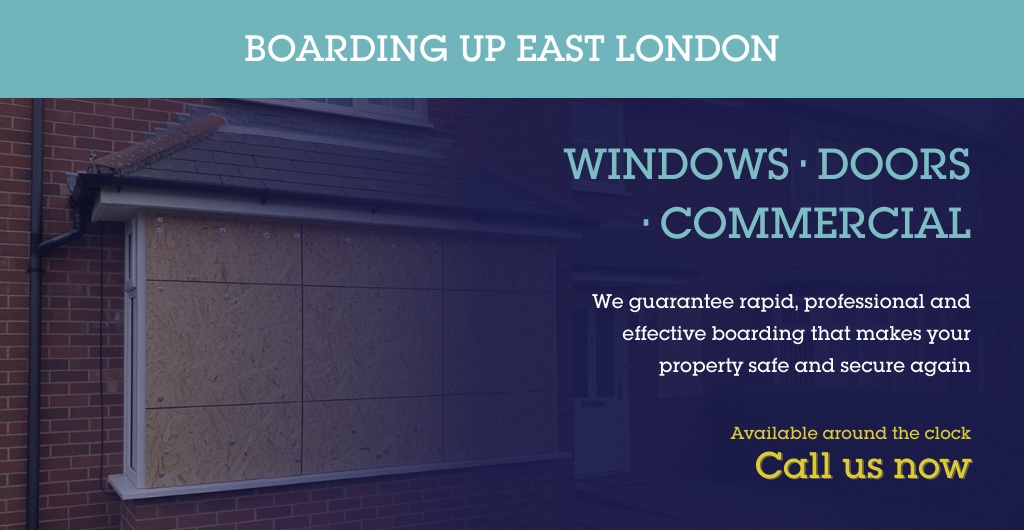
Boarding Up for Vacant Properties in East London (E Postcodes)
A vacant property can go from “quiet” to “at risk” very quickly—especially if a door has already been forced, a window is cracked, or the building looks unoccupied from the street. Whether you’re a landlord between tenancies, a managing agent looking after an empty flat, or a facilities team securing a shuttered site, the priority is the same: secure the property and prevent further loss.
Boarding Up East London provides vacant property boarding up across E1–E77, with fully insured, DBS-checked technicians and 10+ years’ experience securing empty homes, void units, and commercial premises. If you need urgent help, use our emergency boarding up service—we’ll talk you through the next steps and give you a realistic ETA on the phone.
If you’re still planning the handover or you want to reduce risk before anything happens, we can also arrange scheduled securing works, upgrades (like temporary steel doors or security screens), and documentation suitable for insurers or property managers.
Need to secure a vacant property now? Call 020 4634 6384 or email us.
Why vacant properties in East London need proactive security
Vacant buildings tend to attract attention—sometimes simply because there are no lights on, post building up, or bins not being moved. In busy parts of East London and across the E postcodes, void properties can be exposed to:
- Opportunist break-ins through rear doors, side windows, or shared access points
- Vandalism (smashed panes, damaged frames, forced locks, or repeated attacks once a weakness is found)
- Weather ingress after a broken window, missing pane, or damaged rooflight
- Squatting risk if access is easy and the building appears unmanaged
- Insurance complications if a property is left insecure or damage is not addressed promptly
The challenge with vacant property security is that it’s rarely “one and done”. A quick, temporary boarding job may be enough for a single smashed window—while a longer void might need more robust measures that won’t be easily removed from outside.
If you’re not sure what level you need, we’ll explain the options clearly on the phone and on-site.
Typical scenarios we see for vacant and void properties
Vacant property call-outs generally fall into a few common patterns. If any of these sound familiar, you’re not alone—and you don’t need to guess your way through it.
Between tenancies (landlords and managing agents)
A tenant moves out and the property is empty for days or weeks. During viewings, cleaning, or refurbishment, doors may be left unsecured—or an old lock fails. If a window is already cracked or a pane is missing, it can quickly become an entry point.
Common request: board up broken window, board up door, or upgrade a weak back entrance while the property is void.
Probate and long-term empty homes
Properties can sit unoccupied while legal and family decisions are made. Often the building still has older timber frames, original doors, or ground-floor windows that are more vulnerable.
Common request: secure property with stronger boarding, anti-tamper fixings, and a plan for periodic checks.
Void commercial units (shops, offices, light industrial)
Empty units can be targeted after-hours—especially if there’s visible internal space, old stock, or copper wiring. Once glazing is broken, repeat incidents are common.
Common request: shopfront boarded up and upgraded to a more durable temporary solution if the unit will remain vacant.
Post-incident vacancy (burglary, fire, flood, impact)
After a major incident, a property may be left empty while repairs are arranged. This is a high-risk period: doors don’t close properly, frames are damaged, and weather can cause secondary damage.
Common request: make safe immediately, then put in place medium-term security while builders, loss assessors, or surveyors attend.
For incident-specific guidance, see:
- securing a property after burglary
- vandalism repair and boarding
- storm damage boarding
- fire damage securing
- flood damage securing
- accident/impact damage boarding
Our methods for securing vacant properties (and why they work)
Vacant property boarding isn’t just about covering a hole—it’s about reducing the chance of re-entry and protecting the structure from weather and further damage. We choose fixings and materials based on the opening, condition of the frame, and how long the property will be unattended.
Window boarding for void properties
For broken or vulnerable windows, we typically use exterior-grade 18mm plywood for stronger protection, particularly at ground level. For smaller or less exposed openings, 12mm OSB may be appropriate.
Key points in vacant property work:
- Internal fixing where possible to reduce external tampering
- Anti-tamper fixings where external access can’t be avoided
- Correct sizing and bracing to prevent flexing and forced removal
- Consideration of ventilation if the building is damp-affected or post-flood (security and airflow need balancing)
If you want detail on the process, see window boarding in East London.
Door boarding and access control
Damaged doors are one of the biggest risks in empty buildings—especially when the frame is split or the lock area has been forced.
Depending on the condition, we may:
- Board and brace the door area to prevent entry
- Reinforce around the latch/lock point
- Recommend a temporary steel door when the property will be empty for longer, or when repeated attempts are likely
If the existing frame is too compromised for a non-destructive approach, we’ll explain what’s possible before any decisions are made.
More detail: door boarding in East London.
Shopfront boarding for vacant commercial units
Empty shops and office frontages often have large glazed areas. If those are broken, the priority is quick security and weatherproofing without causing unnecessary damage to surrounding frames.
We can secure:
- Large panes and multi-panel shopfronts
- Low-level glazing that’s easy to attack
- Vulnerable side/rear access points that are less visible from the street
More detail: shopfront boarding in East London.
Rooflights and skylights (often overlooked in empty buildings)
Vacant properties are sometimes targeted from above—particularly where there’s access via flat roofs, extensions, or adjoining structures. Even without intrusion, a broken rooflight can let water in quickly.
Where safe access is possible, we can board or cover damaged overhead openings as a short-term measure until repairs are arranged.
More detail: roof boarding in East London.
Longer-term vacant property security: screens, steel doors, and planned measures
If a property will be void for weeks or months, standard plywood may not be the best long-term strategy. In those cases we’ll talk you through longer-lasting options, including:
- Temporary steel doors for robust access control
- Steel security screens for repeated-risk windows (where appropriate)
- A plan that suits your insurer requirements and site risk level
We’ll be honest about limitations: boarding is a security and weatherproofing measure, not a substitute for full repairs. The goal is to keep the property safe while you arrange glazing, joinery, roof repairs, or refurbishment works.
What to expect when you book vacant property boarding in East London
Whether you’re calling from a site, a managing agent’s office, or you’re coordinating access remotely, we aim to make the process straightforward.
1) A quick call to confirm the situation
When you call, we’ll ask:
- Address and postcode district (E1–E77)
- What’s damaged (window, door, shopfront, rooflight)
- Whether access is available (keys, caretaker, neighbour, site contact)
- Any safety concerns (loose glass, unstable frames, fire damage, water ingress)
If it’s urgent or out of hours, we’ll prioritise attendance and provide a realistic ETA—without promising a fixed arrival time, as traffic and workload can vary.
2) On-site assessment and the least disruptive secure option
We look at:
- Condition of the frame/substrate (can we fix internally, is it sound enough to brace?)
- The likely risk level (street-facing, rear access, secluded entry points)
- How long the property will remain empty
If the frame is too damaged for standard fixing methods, we’ll explain alternatives before proceeding.
3) Secure installation, then documentation you can use
After boarding up, you can request:
- Time-stamped photos of the secured openings (useful if you aren’t on-site)
- An itemised invoice and work statement (helpful for property managers and insurers)
For insurance-related support, see insurance claims guidance. We’re not loss adjusters, but we can provide documentation insurers typically ask for.
Practical advice: reducing risk while your property is void
If you’re managing a vacant property in East London, a few sensible steps can reduce the chance of repeat issues:
- Don’t leave broken glazing overnight if it can be avoided—one smashed window can lead to a second entry attempt.
- If safe, take photos of damage before it’s covered (useful for contractors and insurance).
- Keep a record: dates, incident numbers (if police attended), and any previous damage.
- Consider the “soft spots”: rear alley access, side returns, basement/lightwell windows, shared entrances.
- If the property is unheated, treat weather ingress as urgent—boarding can help prevent further internal damage while repairs are arranged.
If you need immediate help, go straight to emergency boarding up or call us.
Vacant property boarding across East London (E1–E77)
We cover the E postcode area and work with landlords, housing providers, facilities managers, and commercial property teams across East London.
You can see the full list on our areas we cover. Examples of local pages include:
If you’re unsure whether your postcode is included, call and we’ll confirm.
Vacant property boarding FAQs (East London)
Do you handle void properties managed by agents and housing providers?
Yes. We regularly work with managing agents and property teams securing empty flats, houses, and blocks across the E postcodes. If access is via a keyholder or concierge, we’ll coordinate with your on-site contact.
Can you board up a vacant property out of hours?
Yes—vacant buildings are often at highest risk at night and weekends, so out of hours attendance is common. Use our 24/7 emergency boarding up page for urgent situations, or call to discuss.
What’s better for a long-term void: plywood boarding or something stronger?
It depends on risk and duration. Plywood is effective for short-to-medium periods, but for longer voids or repeated attempts, you may be better with measures like a temporary steel door and/or security screens. We’ll explain pros and cons on-site.
Will boarding up stop repeat break-ins?
Boarding up significantly reduces risk, but no measure is completely “break-in proof”. The aim is to remove easy access, discourage opportunists, and buy time while permanent repairs are organised. For higher-risk properties, we’ll recommend stronger, longer-term solutions.
Can you secure a property if the door frame is badly damaged?
Often yes, but methods may change. If the frame is split or unstable, standard fixing may not hold. We’ll assess and explain options before proceeding, including whether a temporary steel door is appropriate.
Do you provide photos for absent landlords or remote property managers?
Yes—time-stamped photos can be provided so you can confirm the property is secure without travelling across London. This is particularly helpful for vacant property management and insurance records.
Is boarding up covered by insurance for a vacant property?
Many policies will consider emergency security a reasonable step after damage, but cover varies by insurer and vacancy terms. Keep any crime reference number, take photos if safe, and contact your insurer early. We can provide invoices and a work statement—see insurance claims help.
How quickly can you attend in E1–E77?
Attendance depends on time of day, traffic, and current workload. We prioritise urgent jobs and will give you a realistic ETA when you call.
Ready to secure a vacant property?
If you need temporary boarding, a stronger solution for a longer void, or urgent help after a break-in, we can assist across East London (E1–E77).
Ready to get started? Call 020 4634 6384 or email us for a free, no-obligation quote.
