

What Is Boarding Up? Property Security & “Make Safe” Explained (East London)
Boarding up is a temporary security measure used to secure property after damage, forced entry, or when a building is left vulnerable. In practical terms, it means fitting robust boards or security panels over broken windows, damaged doors, shopfront glazing, or roof openings to prevent access, reduce weather damage, and keep the site safe until permanent repairs can be arranged.
At Boarding Up East London, we provide boarding up across E postcodes (E1–E77), using DBS-checked technicians and methods designed for real-world conditions—busy roads, shared entrances, upper-floor flats, and commercial premises that can’t be left open overnight. If you need urgent help, see our emergency boarding up page.
When boarding up is needed (and why it matters)
Most people only look up “what is boarding up?” when something has already gone wrong—often late in the day, when it’s not realistic to get replacement glass or a new door immediately.
Boarding up is commonly used after:
- A smashed window from vandalism or an attempted break-in
- A forced door, snapped lock, or splintered frame (when you need to board up a door)
- A shopfront incident where you need a shopfront boarded up quickly to protect stock and prevent further damage
- Storm damage where glazing is cracked, frames are loose, or debris has opened up the building
- Fire or flood incidents where the structure is exposed and needs to be made safe
- Vacant/void periods when a property is being renovated or awaiting new tenants
The main risks of leaving openings unsecured are straightforward:
- Further entry and theft (including opportunistic attempts)
- Worsening damage from wind and rain
- Safety issues—sharp glass, unstable frames, and unsecured access points
- Insurance complications if an insurer considers the property wasn’t reasonably protected after an incident
We’re not loss adjusters, but we can provide the documentation insurers typically ask for—more on that in our insurance claims guidance.
What “make safe” means in boarding up
You’ll often hear “make safe” used by police, housing teams, facilities managers, or insurers. In boarding up terms, making safe usually means:
- Securing the opening so it can’t be accessed from outside
- Stabilising loose fragments (for example, removing dangerous shards if safe to do so)
- Weatherproofing as far as reasonably possible for a temporary measure
- Leaving the property in a condition that’s safer for occupants, neighbours, and passers-by
Boarding up isn’t the same as a permanent repair. It’s a temporary boarding solution that buys time so glazing, joinery, or structural repairs can be planned properly.
If you’re dealing with a specific incident, these situation pages may help:
How boarding up works (our typical process)
Every property is different, but a good boarding job follows a consistent logic: assess the risk, choose the right material, and fix it in a way that can’t be removed easily from the outside.
Here’s what normally happens when you call us:
-
We take details on the phone
- What’s damaged (window, door, shopfront, roof/skylight)
- Whether the building is occupied or vacant
- Access considerations (upper floors, rear access, communal entrances)
- Any immediate hazards (loose glass, alarms, shutters, fire damage)
-
We give a realistic ETA
- We don’t promise fixed arrival times—traffic, access, and existing emergencies can affect attendance.
- We prioritise urgent cases and aim to attend as quickly as possible.
-
On-site assessment
- We check the frame condition and the safest fixing method.
- If the frame is too damaged for a non-destructive approach, we’ll explain options before proceeding.
-
Boarding installation
- Boards are measured, cut, positioned, and fixed with security in mind.
- We aim for neat coverage that reduces leverage points and resists tampering.
-
Documentation
- If needed, we can supply time-stamped photos, a clear work statement, and an itemised invoice—useful for landlords, facilities teams, and insurance.
For service-specific detail, see:
- window boarding in East London
- door boarding in East London
- shopfront boarding in East London
- roof boarding in East London
Materials used: plywood vs OSB (and when each is appropriate)
Not all boards are the same, and the right choice depends on the opening size, exposure, and how long it needs to remain in place.
Exterior-grade plywood (common for security-focused boarding)
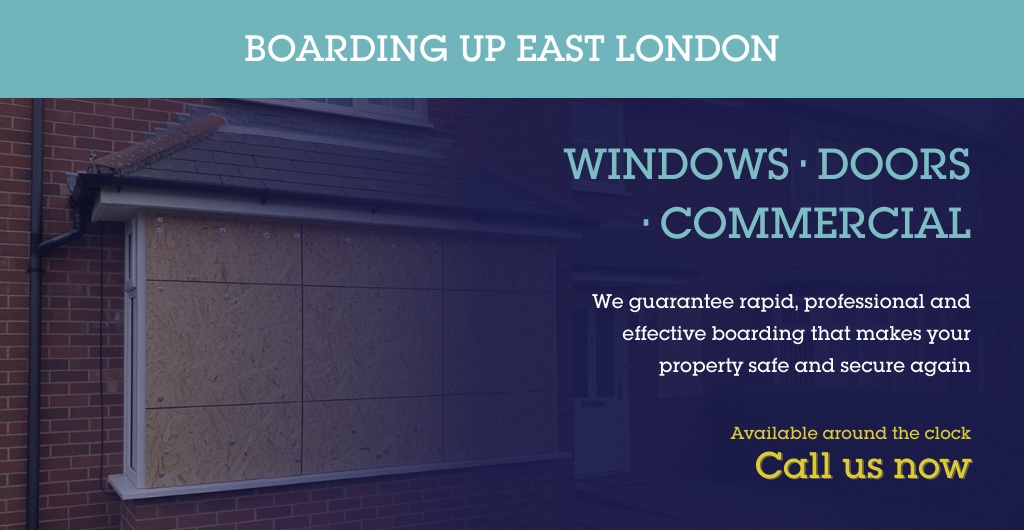
For many jobs we use 18mm exterior-grade plywood because it’s strong, stable, and performs well when fixed correctly.
Plywood is often preferred for:
- Ground-floor windows at higher risk of repeat attempts
- Larger openings where rigidity matters
- Shopfront panels where impact resistance is important
OSB (oriented strand board) for suitable smaller openings
OSB can be appropriate for certain temporary boarding jobs, commonly around 12mm for smaller or lower-risk openings, depending on the situation and frame.
OSB can be useful when:
- The opening is smaller and sheltered
- The requirement is short-term protection
- The fixing method provides sufficient strength
We’ll always choose materials based on what’s needed to secure property properly, not simply what’s quickest. If you have a preference (for example, you want plywood only for an insurance requirement), tell us when you call.
Fixing methods: why “anti-tamper” matters
A key difference between a poor boarding job and a good one is how it’s fixed. If a board can be removed from outside with basic tools, it’s not doing its job.
Depending on the surface and frame condition, we may use:
- Anti-tamper fixings to reduce the chance of external removal
- Fixing patterns designed to prevent prising and flex
- Non-destructive approaches where possible (particularly for occupied homes), balanced against the need for real security
- Additional reinforcement for larger panels, especially on commercial glazing
If there’s extensive frame damage after a break-in, sometimes a better option is a temporary steel door, which can provide safer day-to-day access than a boarded doorway. (This is particularly relevant for void properties or repeated forced entry.)
You can read more about longer-term securing on our vacant property boarding guidance.
Boarding up different parts of a property
Boarding up isn’t one-size-fits-all. The approach changes depending on what’s damaged.
Boarding up broken windows
When you need to board up a broken window, the priorities are preventing access and reducing weather exposure. The frame type (timber, uPVC, metal) and the condition of surrounding putty/beading affect how we fix without causing unnecessary extra damage.
If the opening is on an upper floor, access and safety become part of the plan—especially if there’s broken glass still present.
Related: window boarding in East London
Boarding up doors after forced entry
When a door has been kicked in, the damage is often to the frame and lock area, not just the door leaf. Simply covering the opening may secure it, but it can also leave you without safe access.
Depending on the situation, we may recommend:
- Boarding the door area as a short-term security measure
- Installing a temporary steel door when access is needed but the original door can’t be secured reliably
Related: door boarding in East London
Shopfront boarding and commercial glazing
Retail and commercial jobs often need to be done out of hours, with extra care around:
- Public footfall (keeping the pavement safe)
- Alarm systems and shutters
- Stock protection and visibility (some businesses prefer full coverage; others want a partial solution where appropriate)
Related: shopfront boarding in East London
Roof and skylight boarding
Roof openings, skylights, and overhead glazing bring extra complexity:
- Height and safe access
- Weatherproofing expectations (boarding helps, but it’s not a full roofing repair)
- The need to prevent water ingress until a roofer or glazier can attend
Related: roof boarding in East London
What you get from a professional boarding-up service
People often try to DIY boarding when stressed—especially after a break-in. Sometimes that works as a very short-term stopgap, but it can also create problems (poor fixings, gaps, damage to frames, or boards that are easy to remove).
A professional service should provide:
- A secure fit, chosen for the opening and risk level
- Fixings that discourage removal from outside
- Sensible advice if the frame is too damaged for a straightforward solution
- Documentation: photos and paperwork suitable for landlords, managing agents, and insurers
- A clean, respectful approach—especially in occupied homes
We’ve been trading for 10+ years, we’re fully insured, and our technicians are DBS-checked.
Is boarding up permanent?
No—boarding up is a temporary measure. How long it remains in place depends on:
- How quickly a glazier/joiner can do permanent repairs
- Whether the property is occupied or vacant
- The insurer’s process (some claims require approvals before work proceeds)
- The risk of repeat incidents
If you need medium-term protection for an empty building, a more robust solution than timber boarding may be appropriate. See our vacant property security options.
How much does boarding up cost in East London?
The cost varies. We don’t publish fixed prices because every job is different.
Factors that affect cost include:
- Size and number of openings
- Material choice (plywood vs OSB, thickness)
- Access (upper floors, rear access, restricted working space)
- Condition of frames and whether additional stabilisation is needed
- Out-of-hours attendance and urgency
For a clear explanation of what influences pricing, see boarding up pricing. If you call us, we’ll ask the right questions and give you an honest view based on what you’ve described.
What to do right now if you need boarding up
If you’re dealing with a smashed window, forced door, or exposed opening, these steps usually help:
- If there’s immediate danger or a crime in progress, call 999.
- If it’s safe, take photos of damage for your records/insurer before anything is moved.
- Avoid touching broken glass or unstable frames—injuries are common in the aftermath.
- Keep any crime reference number if police attended.
- Call us to secure the property and reduce the risk of further entry or weather damage.
For urgent help tonight or out of hours, use our emergency page: 24/7 boarding up in East London.
FAQs: What is boarding up?
Do you only board up after burglaries?
No. We regularly attend after vandalism, storm damage, accidents/impact, fire incidents (to secure access points), and during void periods. If you’re unsure, call and describe the damage—if boarding up is the right next step, we’ll tell you.
Is boarding up covered by insurance?
Often it can be, particularly when it’s a necessary “make safe” step after insured damage. Policy cover varies, so it’s worth notifying your insurer early. We can provide photos and documentation that insurers typically request. See insurance claims support.
Will boarding up damage my window frame or brickwork?
A careful job aims to minimise further damage, but security has to come first. Where a non-destructive method is possible, we’ll use it. If the surrounding frame is already split, rotten, or unstable, we’ll explain the most secure option before starting.
Can you board up a door and still let us in and out?
Sometimes yes, but boarding a doorway can remove safe access. Where access is needed (especially for residents, trades, or managing agents), a temporary steel door may be a better fit than fully boarding the opening. We’ll talk through options on site.
How long does it take to board up a broken window?
It depends on the size of the opening, access, and whether there are multiple damaged points. A single straightforward window can be secured quickly; shopfronts or multiple panes take longer. If you call, we’ll set expectations based on your situation.
Do you operate across all E postcodes?
Yes—Boarding Up East London covers E1–E77, including residential streets, estates, commercial parades, and industrial areas. If you’re not sure which E postcode you’re in, tell us the area and we’ll confirm.
Can you attend out of hours?
Yes. We offer out of hours and overnight assistance when a property can’t safely be left open. We don’t guarantee fixed arrival times, but we prioritise urgent cases and provide a realistic ETA on the phone.
Next step: get the property secured
If you need help with emergency boarding up, a board up broken window, or to board up a door after damage in East London, we’re here to help.
Ready to get started? Call 020 4634 6384 or email us for a free, no-obligation quote.
